
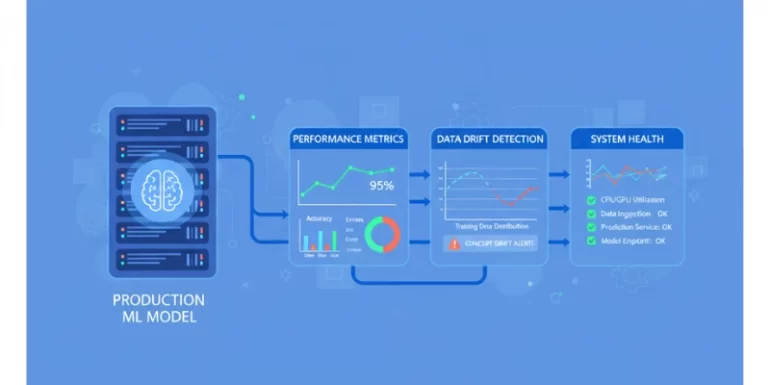
Deploying a machine learning model does not signify the conclusion of the data science journey. It is the beginning of a crucial phase called model monitoring, where ensuring consistent performance is key. If you want to gain hands-on skills in deploying and monitoring machine learning models, consider enrolling in a Data Science Course in Trivandrum at FITA Academy. Learning these concepts will help you detect issues early, maintain accuracy, and keep your models reliable in production.
Why Monitoring is Important
Models for machine learning are developed using past data; however, the environment surrounding them continues to evolve. When the underlying data shifts, model performance can degrade, leading to poor predictions and costly outcomes. This problem is known as model drift. Monitoring allows data teams to identify such drifts quickly and take corrective actions.
In addition to drift, production environments can introduce data quality issues, system errors, or integration problems. Without continuous monitoring, these issues may go unnoticed until they start affecting key business metrics. This is why understanding model monitoring is so important. If you want to learn these skills in depth, joining a Data Science Course in Kochi can help you master monitoring, ensure model stability, and maintain fairness and compliance in real-world projects.
Key Aspects of Model Monitoring
Effective model monitoring covers several important areas. The first is data monitoring, which focuses on input data quality. Any missing values, unusual distributions, or format changes can affect the model’s predictions. The second area is performance monitoring, which tracks how well the model performs over time using metrics such as accuracy, precision, or recall.
Another key area is concept drift detection. Concept drift happens when the connection between input variables and the desired result shifts. For instance, a model predicting customer churn may lose accuracy if market conditions or customer behavior evolve. Regular performance tracking helps detect such changes before they cause significant business impact.
Lastly, operational monitoring ensures that the model and related services are running smoothly. This includes checking response times, resource usage, and overall system health. Comprehending these factors is crucial for ensuring dependable models in a production environment. To gain hands-on experience in operational monitoring and other core data science skills, consider taking a Data Science Course in Gurgaon, where you can learn to track performance, ensure efficiency, and keep AI systems running effectively.
Setting Up an Effective Monitoring Strategy
A successful monitoring strategy begins with defining clear objectives. Teams should identify which metrics matter most for the model’s purpose. For example, a fraud detection model might prioritize recall to minimize missed fraudulent cases.
Next, automated alerts should be established. These alerts notify the team whenever a metric falls below a defined threshold. Regular reports and dashboards help track long-term trends and support informed decision-making. Collaboration between data scientists, engineers, and business stakeholders is also essential to align technical insights with business needs.
Taking Action When Performance Drops
Monitoring is meaningful only when it leads to action. If a model’s performance declines, teams can retrain it using newer data or adjust its features to reflect current patterns. In some cases, replacing the model entirely may be necessary. Documenting these changes and tracking their impact helps maintain transparency and accountability.
Monitoring machine learning models in production ensures that they continue to deliver value long after deployment. It protects against performance degradation, data issues, and changing environments. To gain practical skills in building and monitoring reliable models, consider enrolling in a Data Science Course in Jaipur. With the right training, you can learn to implement structured monitoring approaches, maintain trustworthy models, achieve consistent results, and support better data-driven decisions.
Also check: Matplotlib vs Seaborn vs Altair: Which Should You Use?